
If you’ve been researching baby sleep, you’ve probably come across both terms. But they’re not the same thing — and understanding the difference can completely change how you approach sleep from the very beginning.
The short version: sleep shaping happens before there’s a problem to fix. Sleep training happens after. And for many families, starting with sleep shaping means less stress, fewer tears — for babies and parents — and a much smoother path to independent sleep down the road.
Here’s what each actually means, when each applies, and how to know which one your family needs right now.
What Is Sleep Shaping?
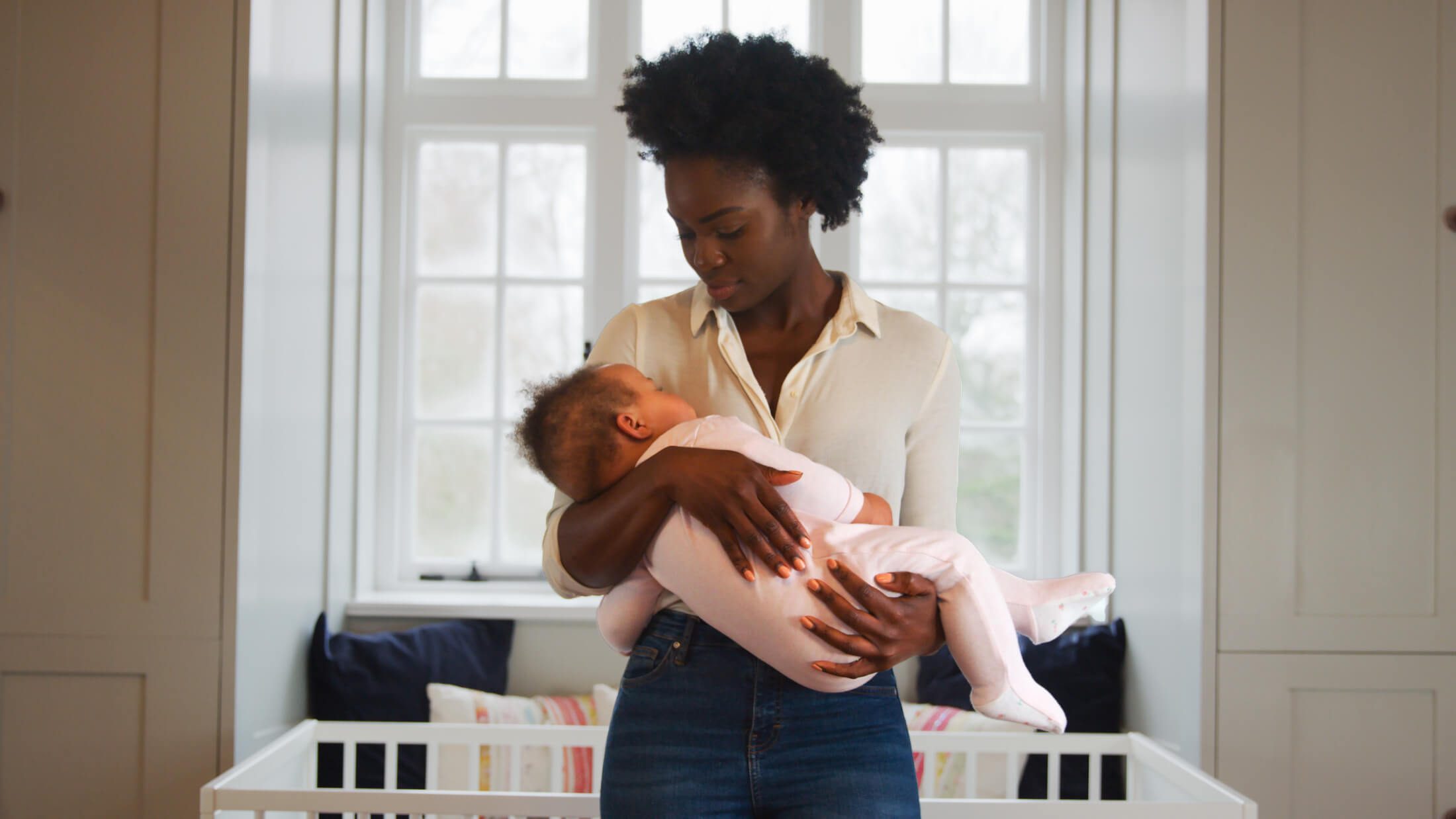
Sleep shaping is a proactive, low-intervention approach to supporting healthy sleep development in newborns and young infants — typically from birth through around 3 to 4 months of age.
It’s not about teaching your baby to fall asleep independently. Newborns aren’t developmentally ready for that, and expecting it will only leave you frustrated. Sleep shaping works with where your baby actually is — biologically, neurologically, and developmentally.
In practice, sleep shaping looks like:
- Establishing consistent day/night rhythms so your baby’s circadian system starts to organize itself early
- Creating a calm, predictable sleep environment — darkness, white noise, safe sleep setup — that supports longer, more consolidated sleep
- Reading and responding to tired cues before your baby reaches overtired and overstimulated
- Building flexible, age-appropriate wake windows that work with your baby’s natural rhythms
- Introducing a simple, repeatable pre-sleep routine even in the first weeks — bath, feed, darkness, same sequence — so your baby begins associating certain cues with sleep
- Protecting contact naps and feeding-to-sleep in the early weeks, without judgment, while also creating some opportunities for calm-but-awake practice when your baby is calm and ready
Sleep shaping doesn’t require any crying. It doesn’t require a rigid schedule. And it doesn’t require you to stop responding to your baby’s needs. It simply means you’re being intentional — building the foundation now so that sleep skills have something solid to grow on later.
What Is Sleep Training?
Sleep training is an intervention used to help babies and toddlers who are already struggling with sleep — frequent night wakings, inability to fall asleep without feeding or rocking, short naps, early morning waking — learn to fall asleep more independently.
It typically begins around 4 to 6 months of age, when babies have developed enough neurologically to start consolidating sleep and building self-settling skills.
Sleep training is not one single method. It’s a broad category that includes:
- Graduated methods (like Ferber) that involve intervals of checking in
- Fading methods that gradually reduce parental presence over time
- Chair methods where a parent stays in the room but gradually moves further away
- Gentle, responsive approaches that prioritize minimizing distress while still building independence
The word ‘sleep training’ carries a lot of baggage — most of it tied to the assumption that it means letting your baby cry alone indefinitely. That’s one method. It’s not the whole picture, and it’s certainly not the only option.
What all sleep training methods have in common is this: they’re asking a baby who has already developed certain sleep associations to change those associations. That’s why the earlier you can build healthy foundations — through sleep shaping — the more options you have later.
Sleep Shaping vs. Sleep Training: Side by Side
| Sleep Shaping | Sleep Training | |
| When | Birth to ~4 months | 4–6 months and beyond |
| Goal | Build healthy sleep foundations | Teach independent sleep skills |
| Approach | Proactive, low-intervention | Responsive to an existing challenge |
| Crying involved? | Generally no | Varies by method |
| Parent involvement | High — learning alongside baby | High — guiding the process |
| Schedule required? | No — rhythms, not rigid schedules | Helpful, yes |
| Result | Better baseline for sleep development | More independent, consolidated sleep |
Why Sleep Shaping Matters More Than Most Parents Realize
Here’s something that often gets overlooked: the habits and patterns that form in the first 8 to 12 weeks of life aren’t random. They’re shaped — consciously or not — by the environment and responses your baby experiences every day.
Families who use sleep shaping from the start tend to reach the 4-month mark with babies who already have some capacity to settle, who have clearer rhythms, and who respond more readily when gentle sleep coaching is introduced.
That doesn’t mean you’ve failed if you didn’t start at birth. It means that starting now — wherever you are — still matters.
It also means that if you’re currently pregnant and reading this: this is the window. Building sleep foundations in the newborn stage is one of the most impactful things you can do for your family’s long-term wellbeing.
When Sleep Shaping Isn’t Enough
Sleep shaping isn’t a guarantee, and it’s not a fix for every situation.
Some babies will still struggle with sleep even with the best foundations in place — temperament, feeding challenges, medical factors, and parental capacity all play a role.
If your baby is past 4 months and you’re dealing with:
- Multiple night wakings that aren’t feeding-related
- Naps that only happen in motion (stroller, car, carrier)
- A baby who can only fall asleep feeding or being held
- An exhausted household that’s no longer functioning well
…then sleep shaping alone isn’t what you need. That’s when sleep coaching becomes the right next step.
Sleep coaching at this stage isn’t a failure of the newborn phase. It’s a developmentally appropriate response to where your baby is now — and it’s something families navigate all the time, with the right support.
What This Looks Like in Practice
At Bump to Babe, sleep foundation-building is woven into postpartum doula support from day one. That means families aren’t starting from scratch at 4 or 6 months — they’re building on something.
For families who do need sleep coaching later, that continuity matters. The same approach, the same values, the same commitment to customized — not cookie-cutter — support.
Whether you’re pregnant and want to start with sleep shaping, or you’re in the thick of sleepless nights and need a clear path forward, the goal is the same: a family that rests, recovers, and feels confident in what they’re doing.
Frequently Asked Questions
What age should you start sleep shaping?
You can begin sleep shaping from birth. The focus in the first weeks is on establishing day/night rhythms, a calm sleep environment, and consistent pre-sleep cues — not schedules or independent sleep.
Is sleep shaping the same as sleep training?
No. Sleep shaping is proactive and begins in the newborn stage. Sleep training is typically introduced at 4–6 months when a baby is developmentally ready to learn independent sleep skills.
Does sleep shaping involve any crying?
Generally, no. Sleep shaping works with your baby’s biology and doesn’t ask them to fall asleep without support. Some fussiness is normal during any transition, but sleep shaping doesn’t involve intentional periods of crying.
Can you sleep shape and still feed to sleep?
Yes. Feeding to sleep is developmentally normal in the early weeks. Sleep shaping doesn’t require eliminating all sleep associations — it means being intentional about the environment and rhythms you’re creating, while also introducing some variation when your baby is calm and ready.
What if I didn’t do sleep shaping and my baby is already 5 months?
It’s not too late. Sleep coaching at 4–6 months and beyond is appropriate, effective, and very common. Starting with shaping earlier simply means more options later — but it’s never the only path.
When should I consider sleep coaching instead of sleep shaping?
If your baby is past 4 months and struggling with sleep consolidation, independent settling, or frequent night waking beyond feeding needs, sleep coaching is likely the right next step.